JEE Study Buddy - Case study
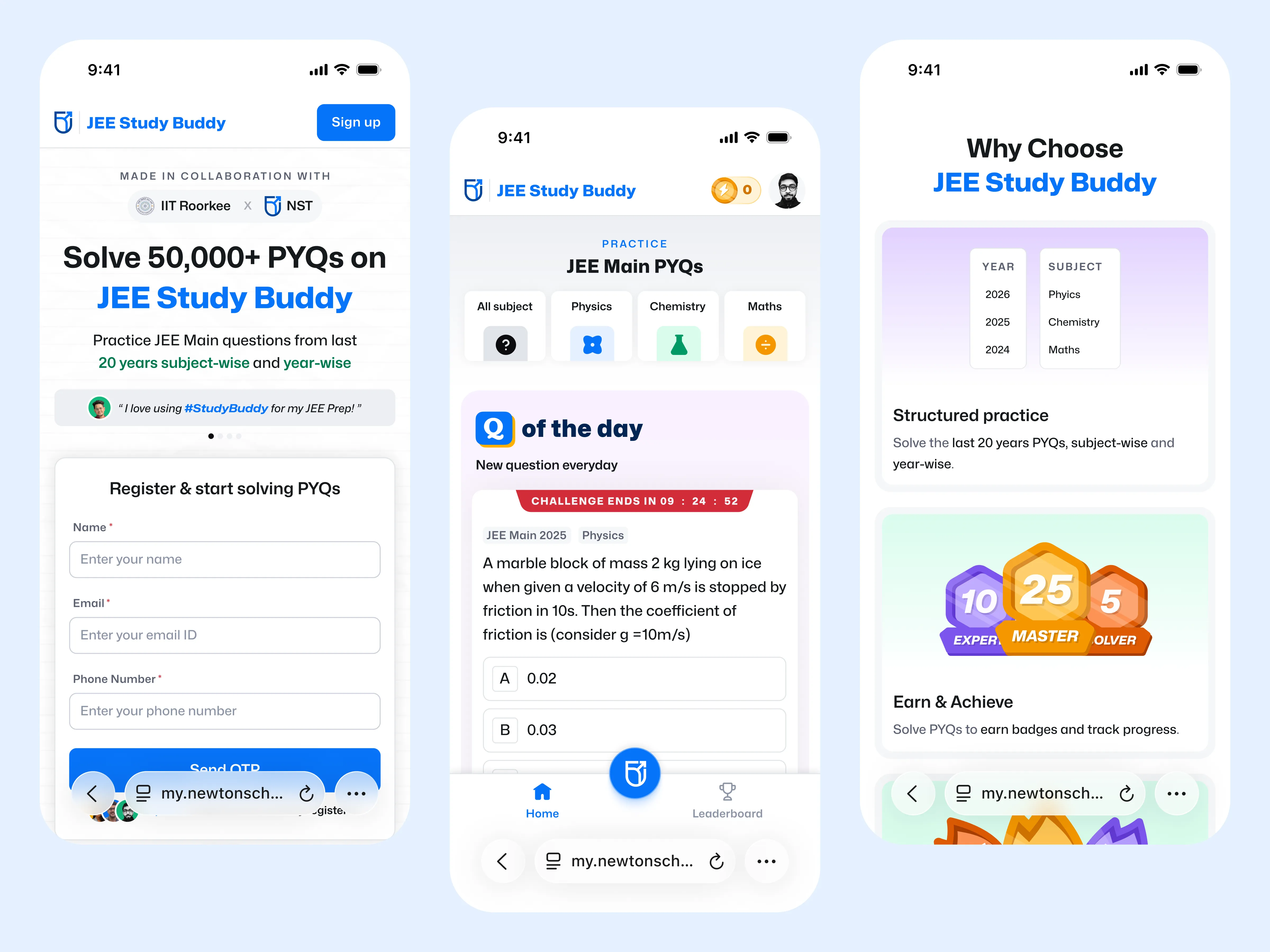
Jan 10, 2026A detailed walkthrough of how I designed a retention-first gamified platform to practice JEE Main PYQs. It is one of the growth products we used to generate leads for Newton School of Technology (NST).
How did it all start?
Imagine your 17-year-old cousin preparing for JEE in a Kota hostel. It's 1 AM and they're stuck on a physics question. Friends are buried in their own prep. The teacher's doubt group is silent. No one replies.
Going deeper
Our PM team visited Kota for student research in Nov'24 as part of a larger strategy to build growth products that create brand awareness for NST and unlock new lead acquisition channels.
What we observed
We talked to dozens of students in hostels, outside coaching gates, even between classes. Online students were hit by FOMO with no one to discuss doubts with. Offline students had teachers but still carried unresolved doubts. The pattern was clear: everyone was preparing, but no one was preparing together.
Our initial solution
Our first instinct was to connect students with each other. Match someone weak in Physics with someone strong. We decided to build a matchmaking platform for students.
We had to pivot
Building a matchmaking platform is like building a social network. We had 2 weeks for design and 2 for development. Our tech lead raised a valid concern: students sharing numbers, moving to WhatsApp, moderation and legal risks. Our founders had pivoted from a similar product (Bolo) in Aug'19 for the same reasons. We pivoted early.
The pivoted solution
Students value PYQs a lot. Every platform offering them looked and functioned the same, mostly PDFs or basic exam formats. Since we were building for growth, we needed something different. What if we gamify solving PYQs and show students where they stand at the All India level?
Leveraging Octalysis
Around the same time, I was reading Octalysis, a gamification framework. One core drive is Unpredictability and Curiosity. You keep engaging because you don't know what's coming next.
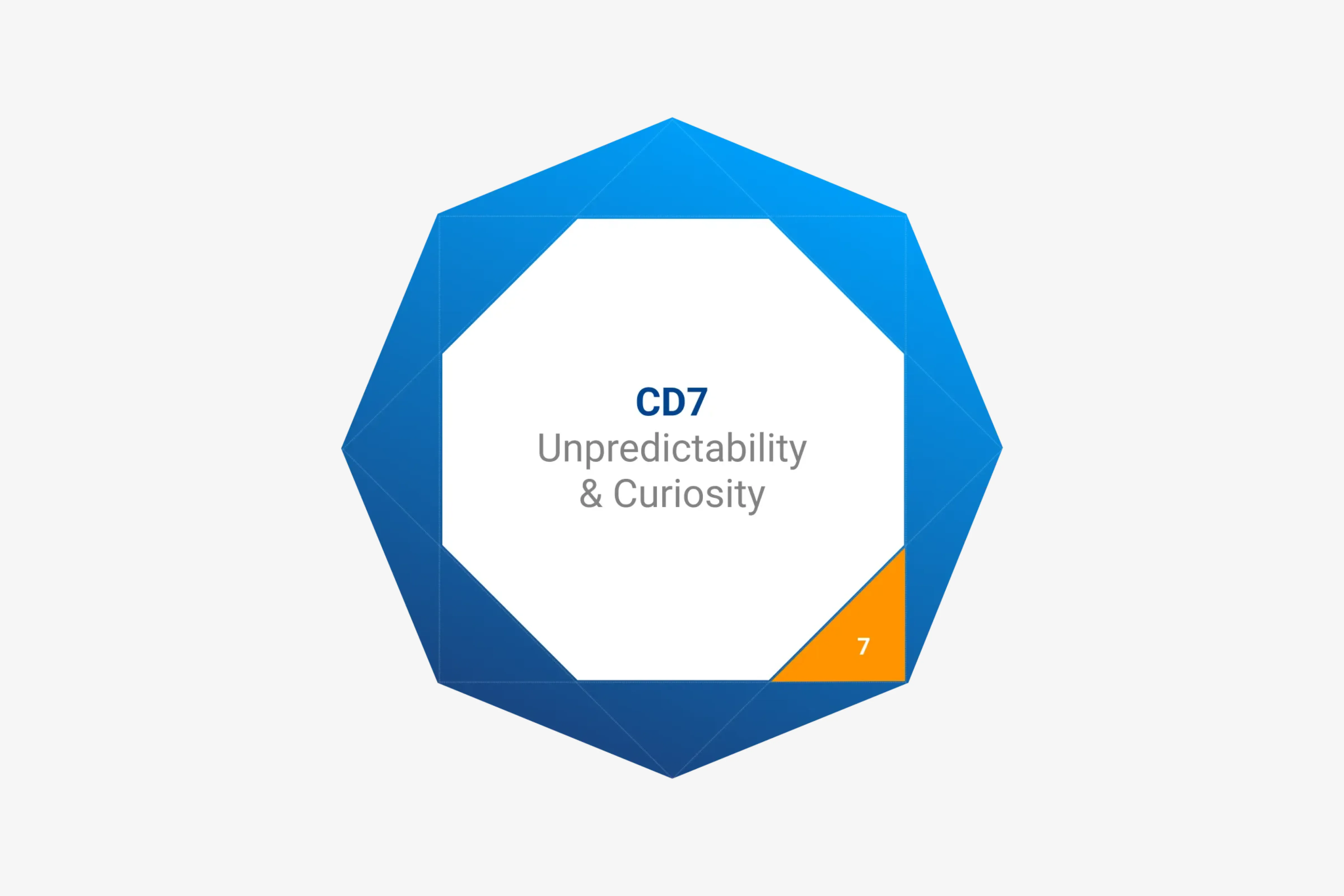
Reels are addictive because upon scrolling you don’t know what’s going to come next and that’s what keep you hooked. Applying this to a random question stream based on student preferences would drive engagement. Between questions, we could show NST ads. We'd also reward students with XP and show their All India rank on a leaderboard. PMs loved it. This became the core of the product.
Landing page
I started with the landing page. The goal was to keep it short and clearly explain the product proposition.
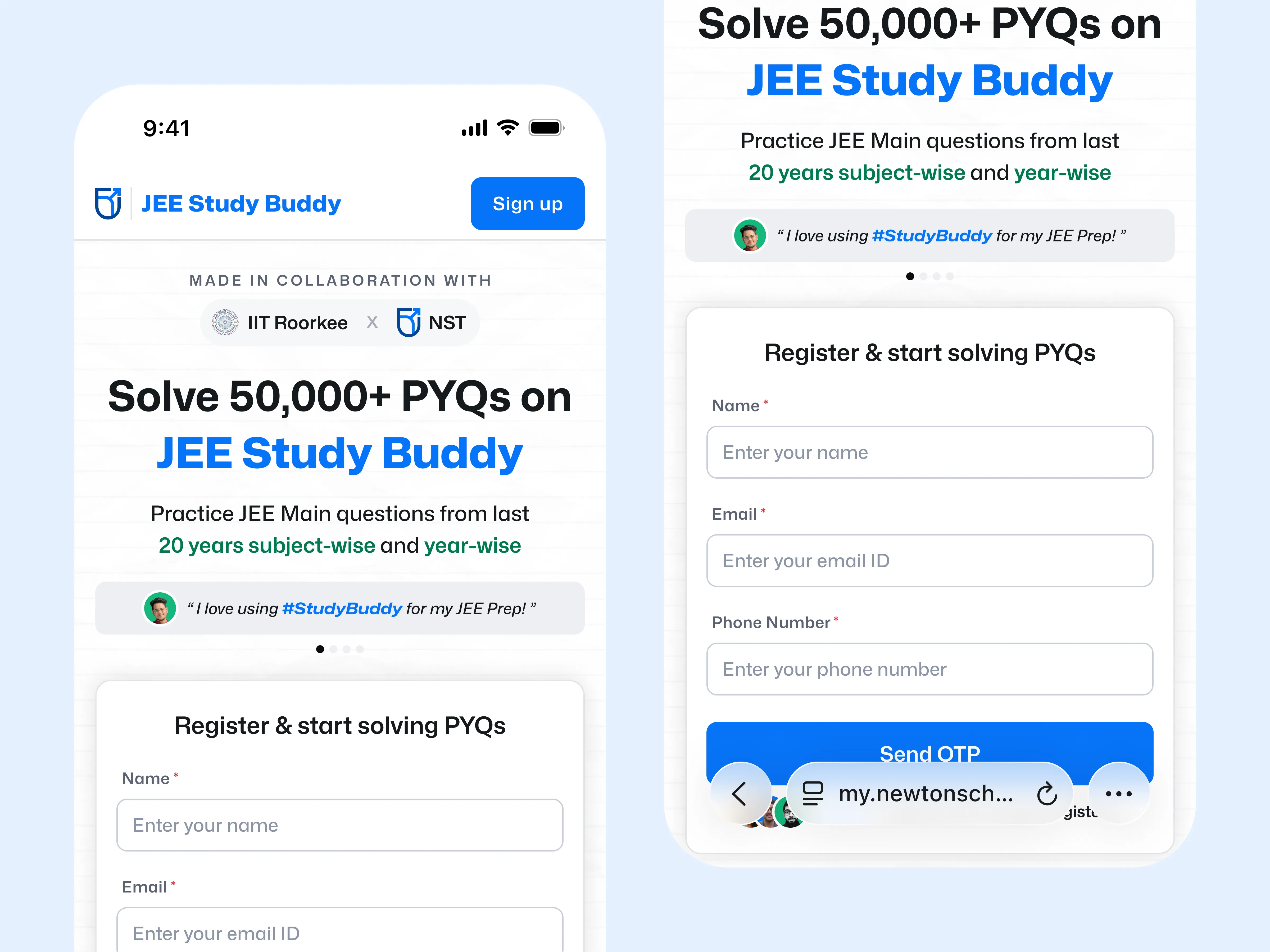
We added a papery touch to evoke the feeling of solving PYQs from a physical book.
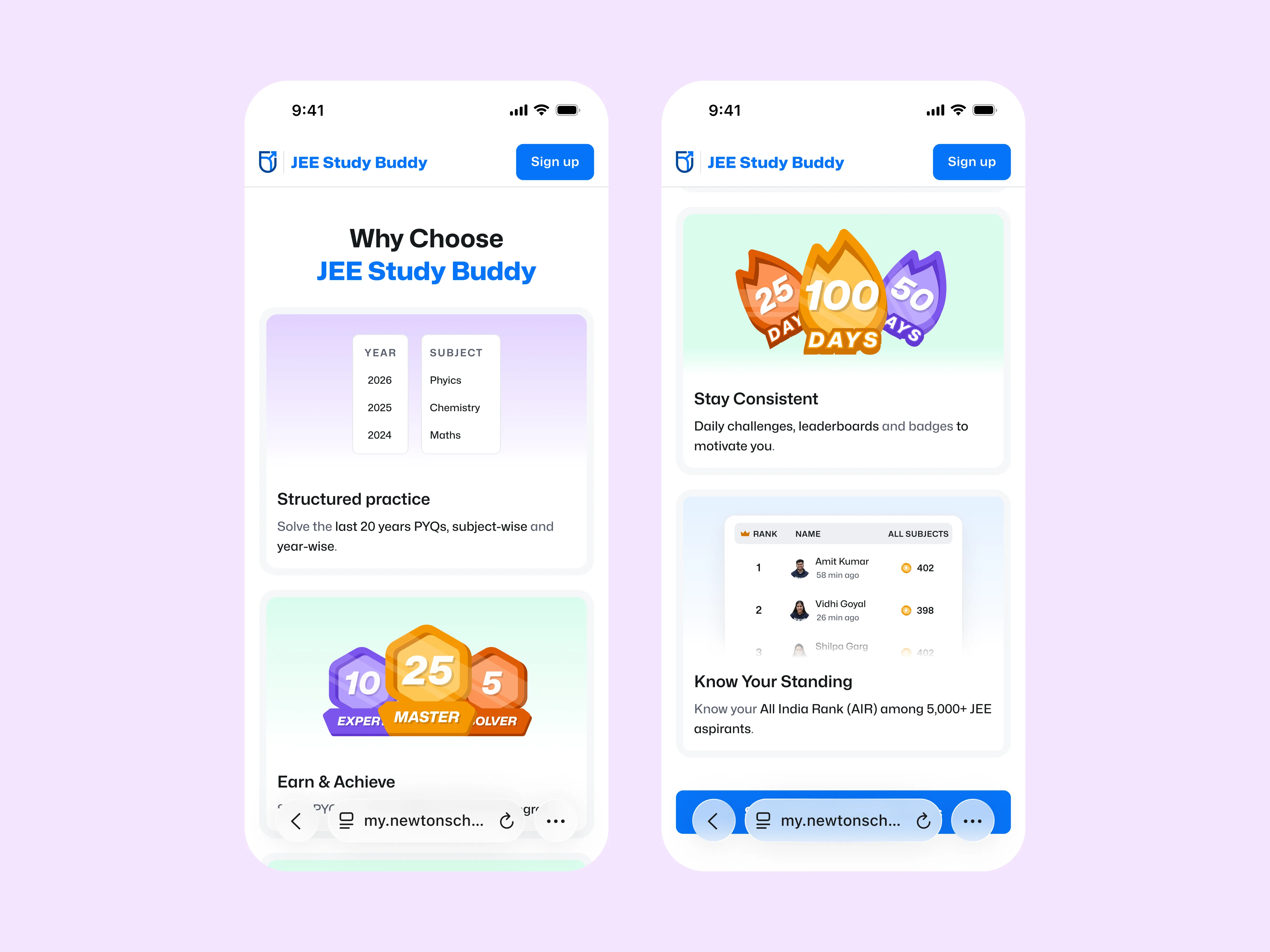
Just two sections, enough to convince students to start. The rest was SEO content.
Homepage
The goal was to make it as easy as possible for a student to start solving previous year questions.
First take: show the previous year upfront. But what if a student wants to solve questions from multiple years?
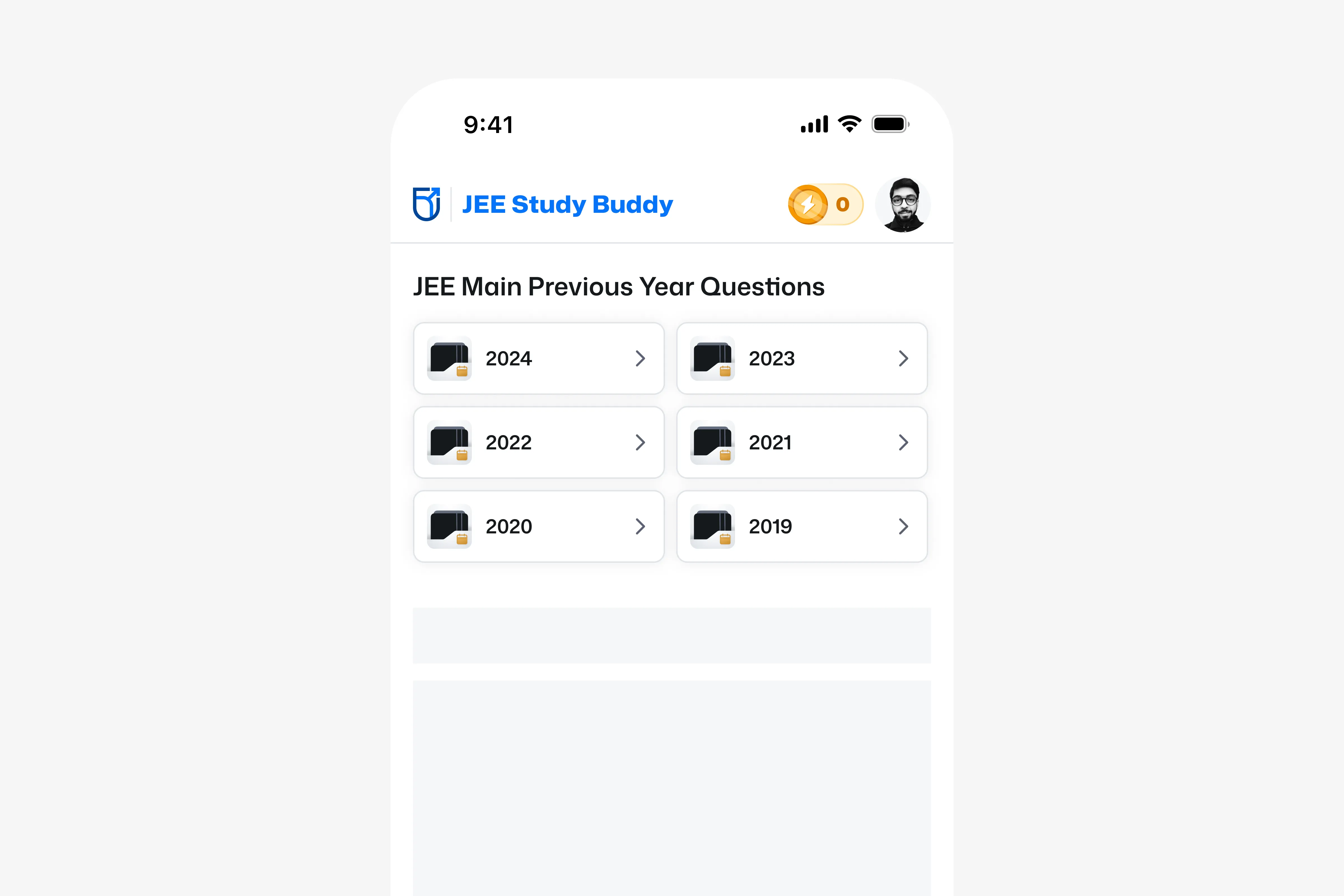
Second take: show subjects upfront. Same concern for multiple subjects, though less of an issue since JEE has only 3-4 subjects.
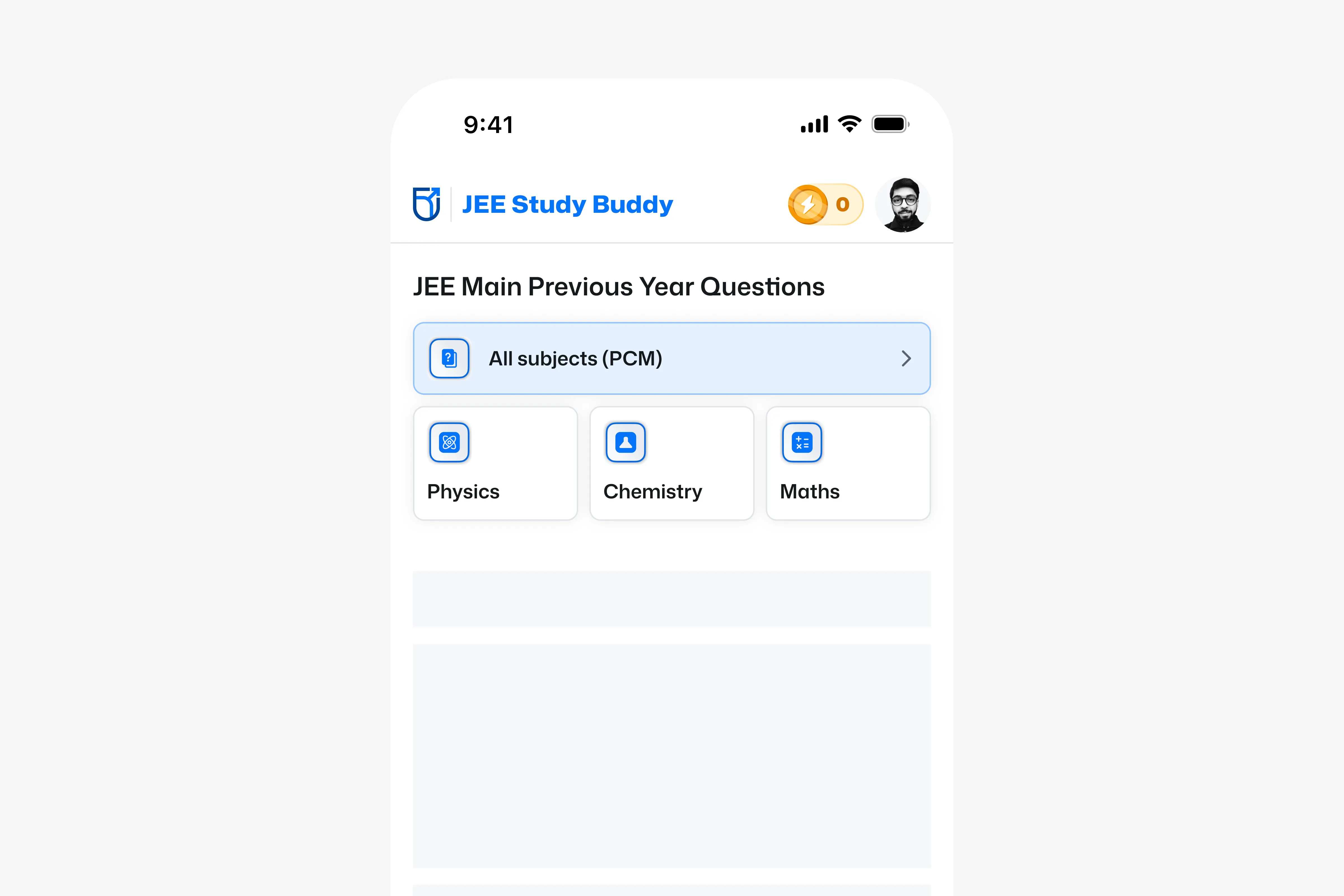
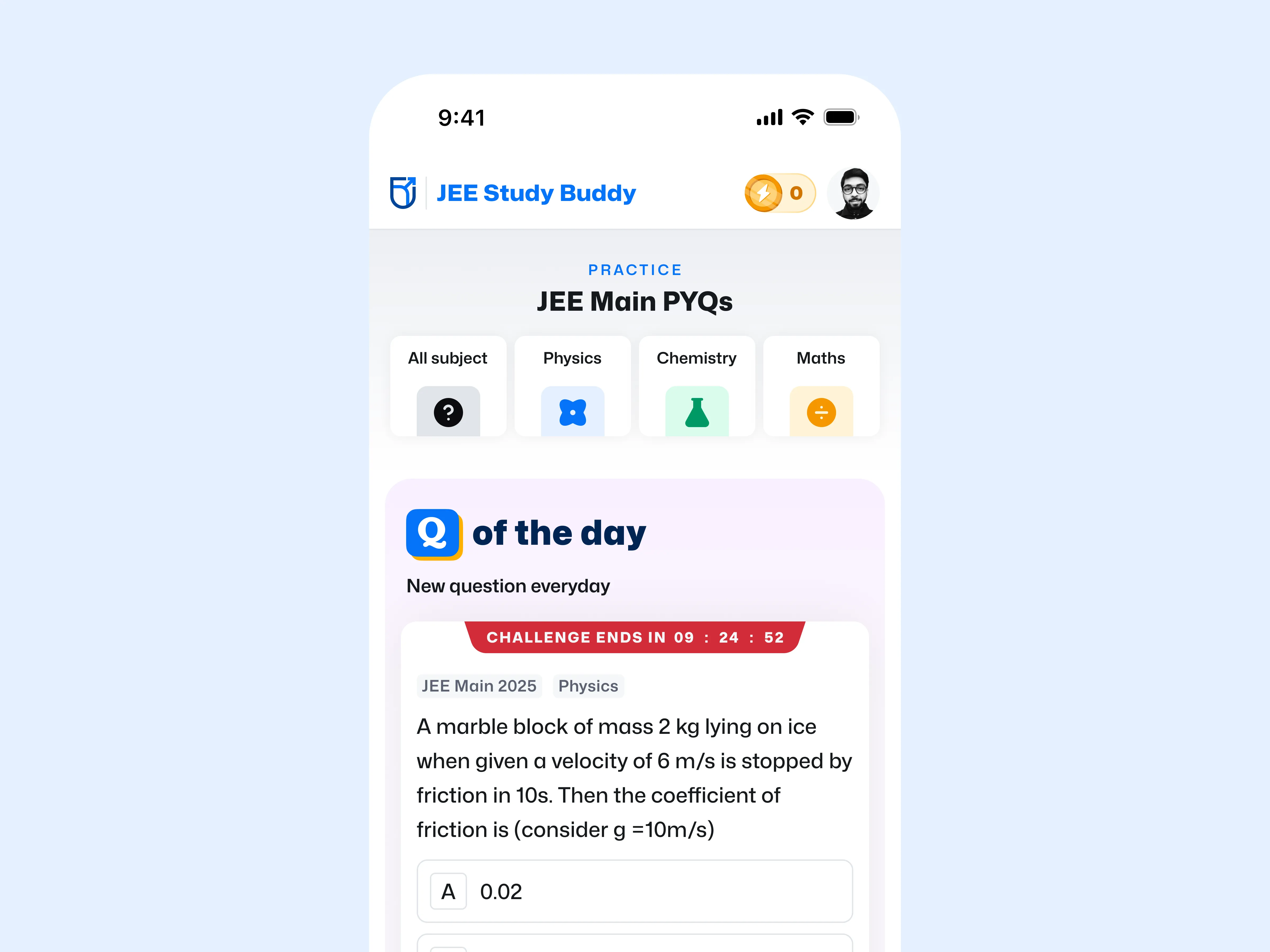
Final take: applying the unpredictability principle, could we show product value immediately? That's when the idea of Question of The Day (QOTD) was born. We would show a random PYQ upfront on the homepage.
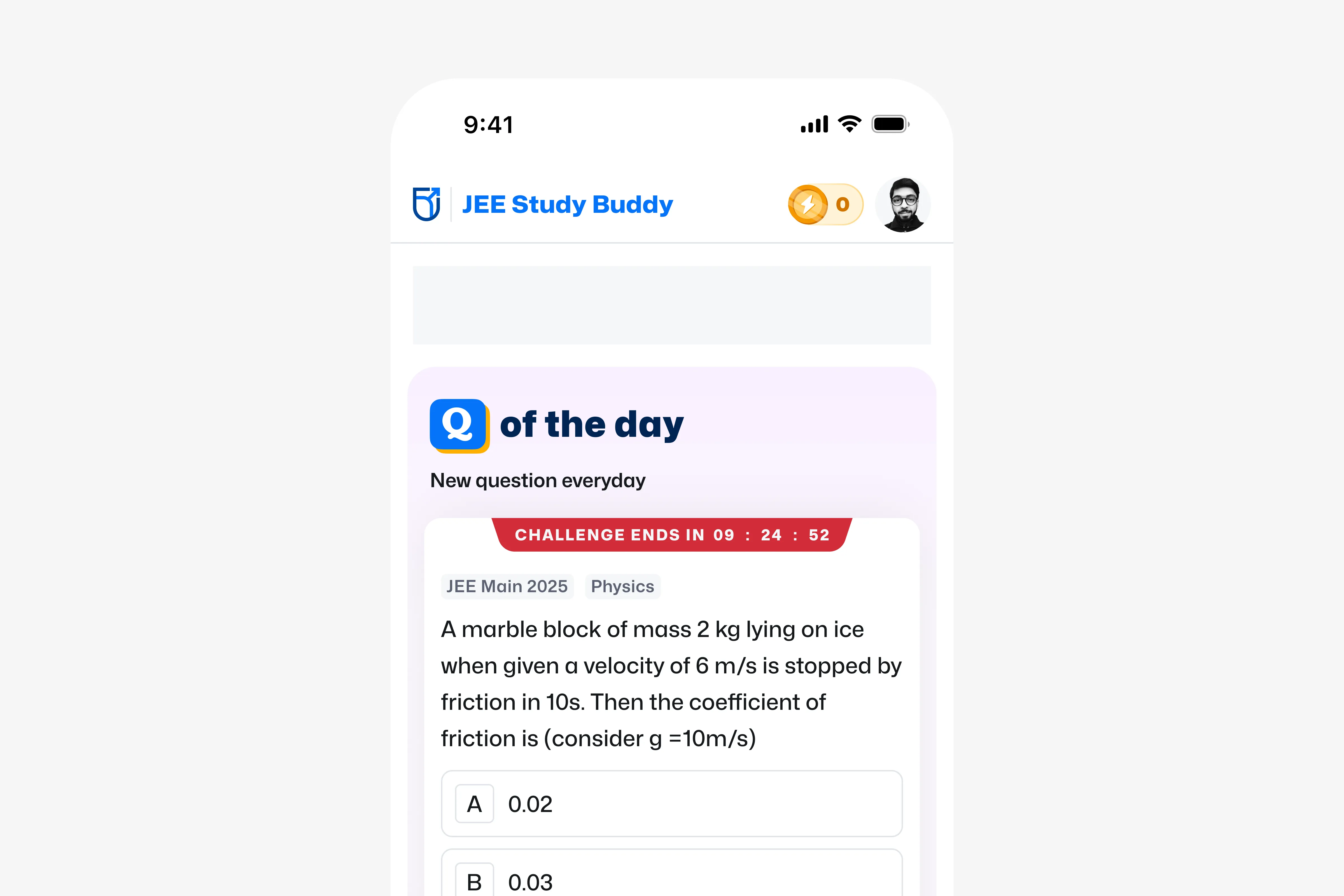
An MCQ a student can answer instantly would deliver product value and increase intent to solve more PYQs.
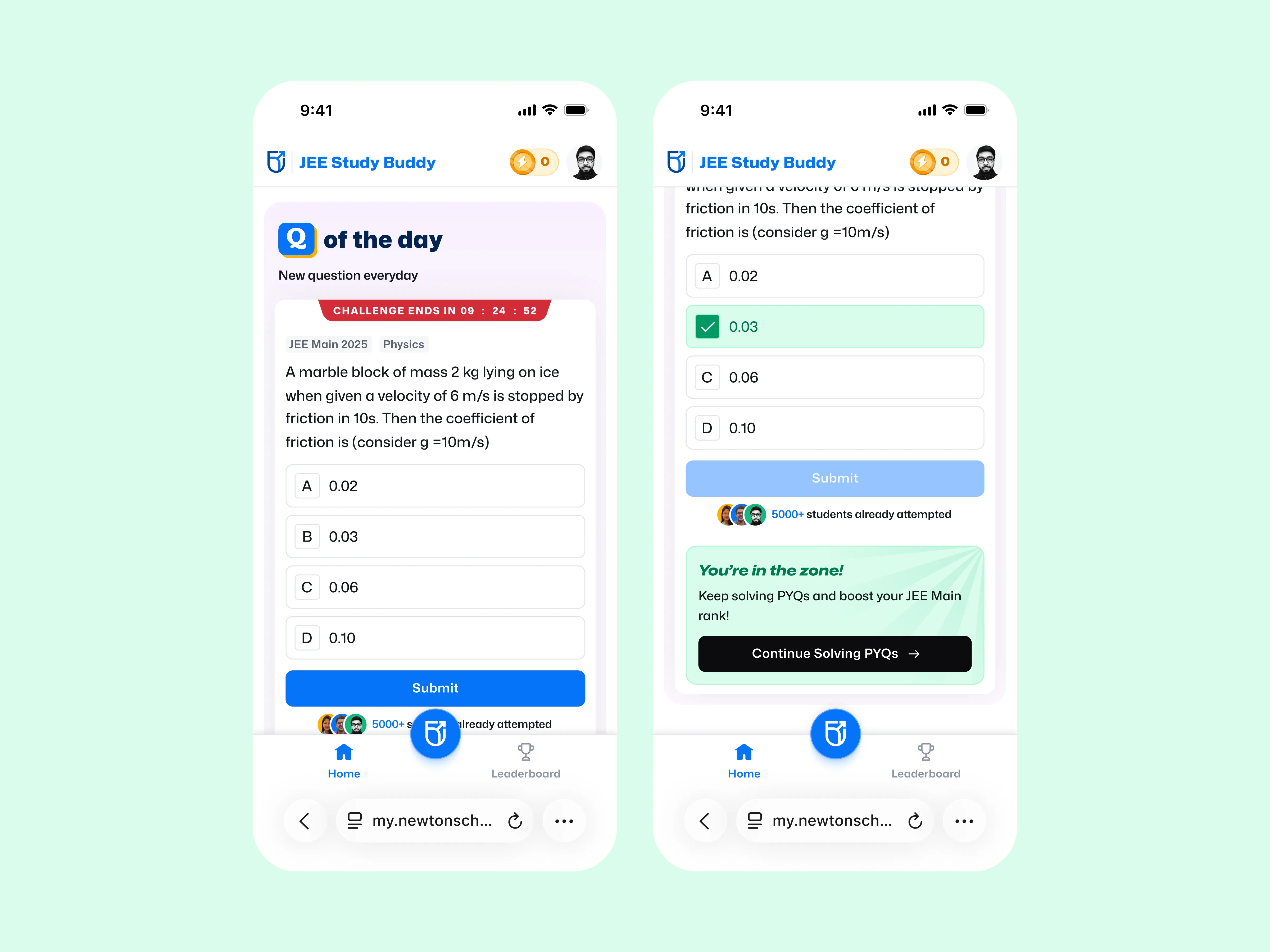
Beyond QOTD, the subject section at the top lets students start solving by preference.
The core of the product
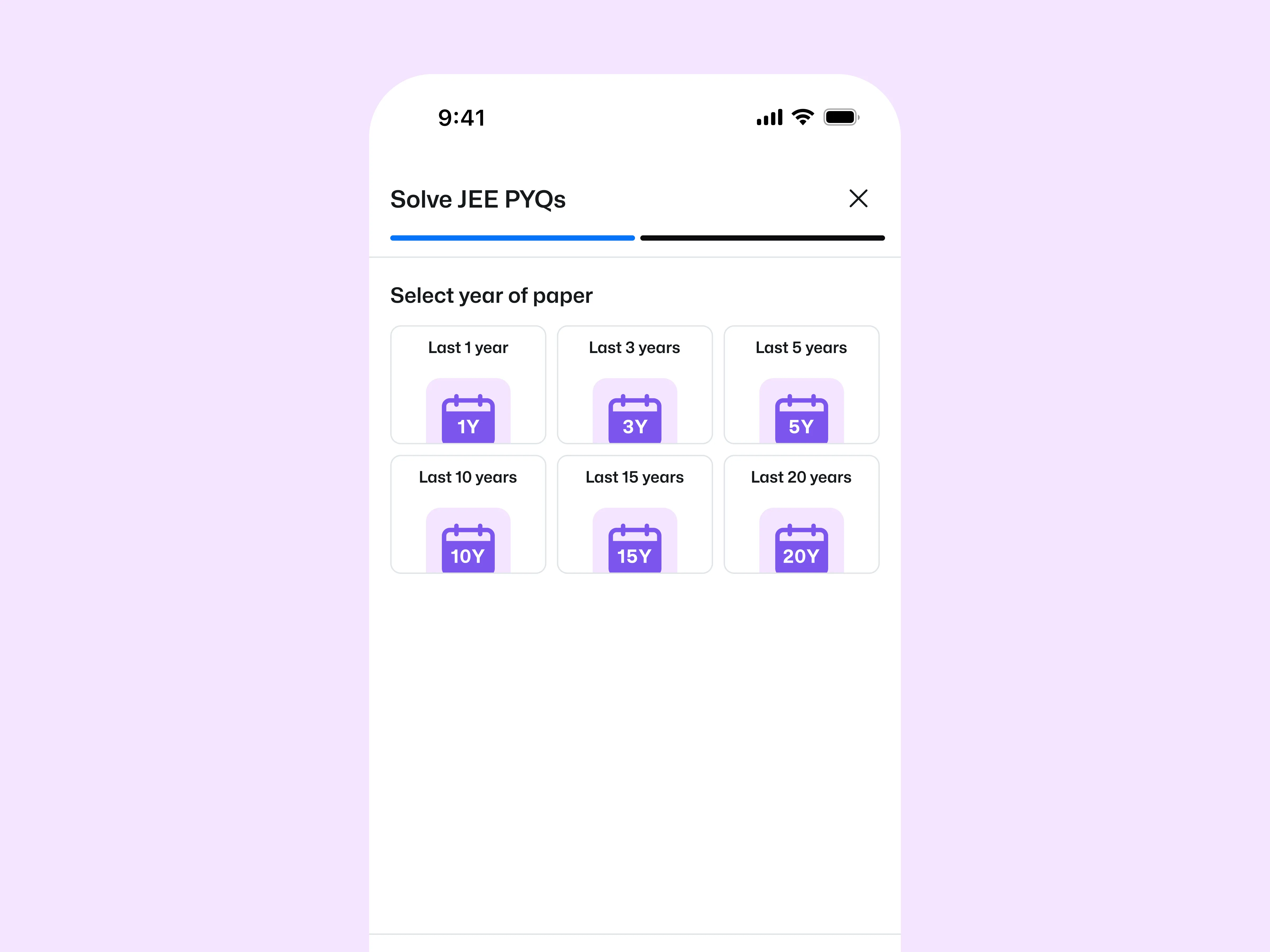
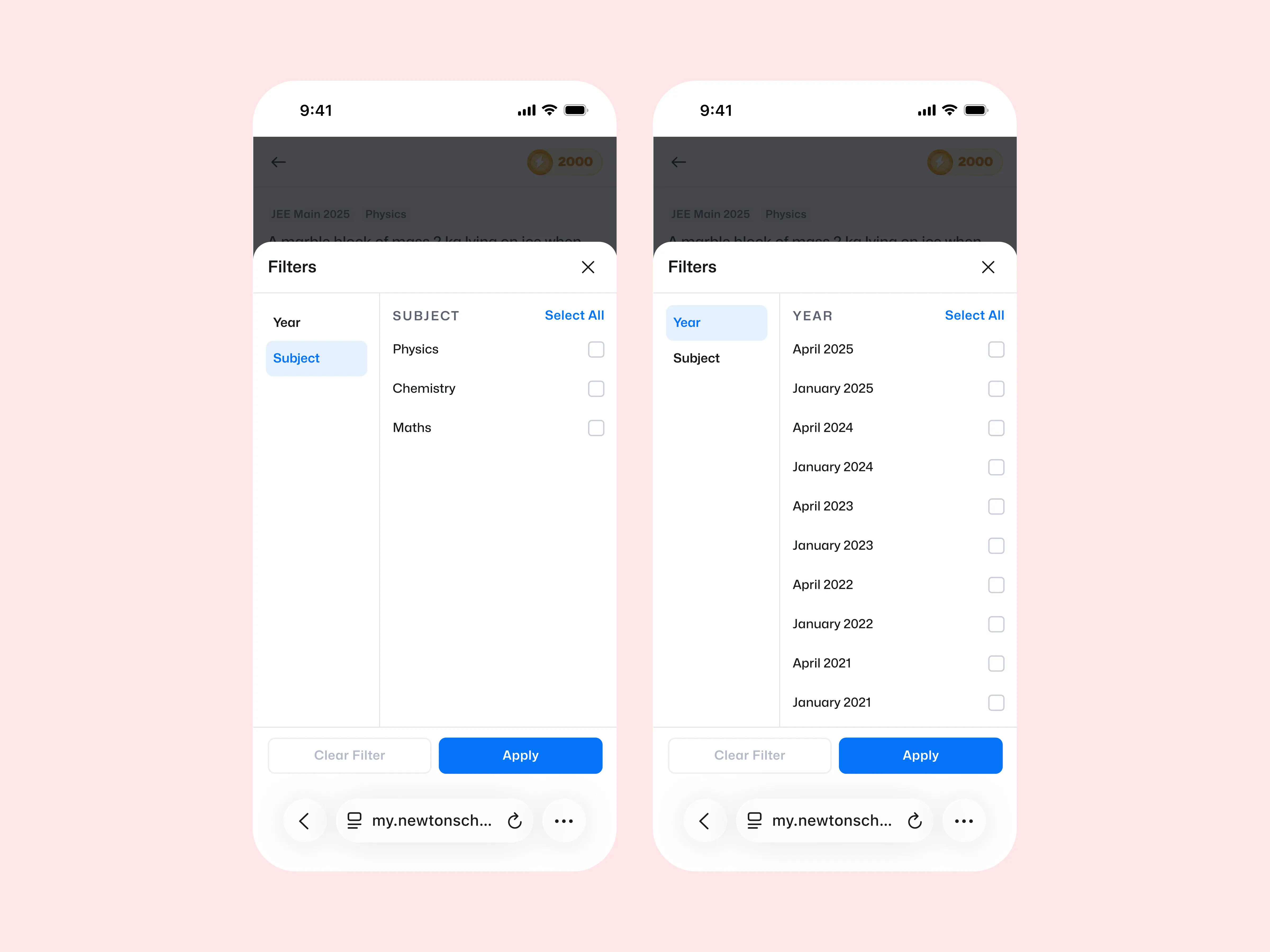
If a student picks a subject from the homepage, we ask which years to cover, then start the flow.
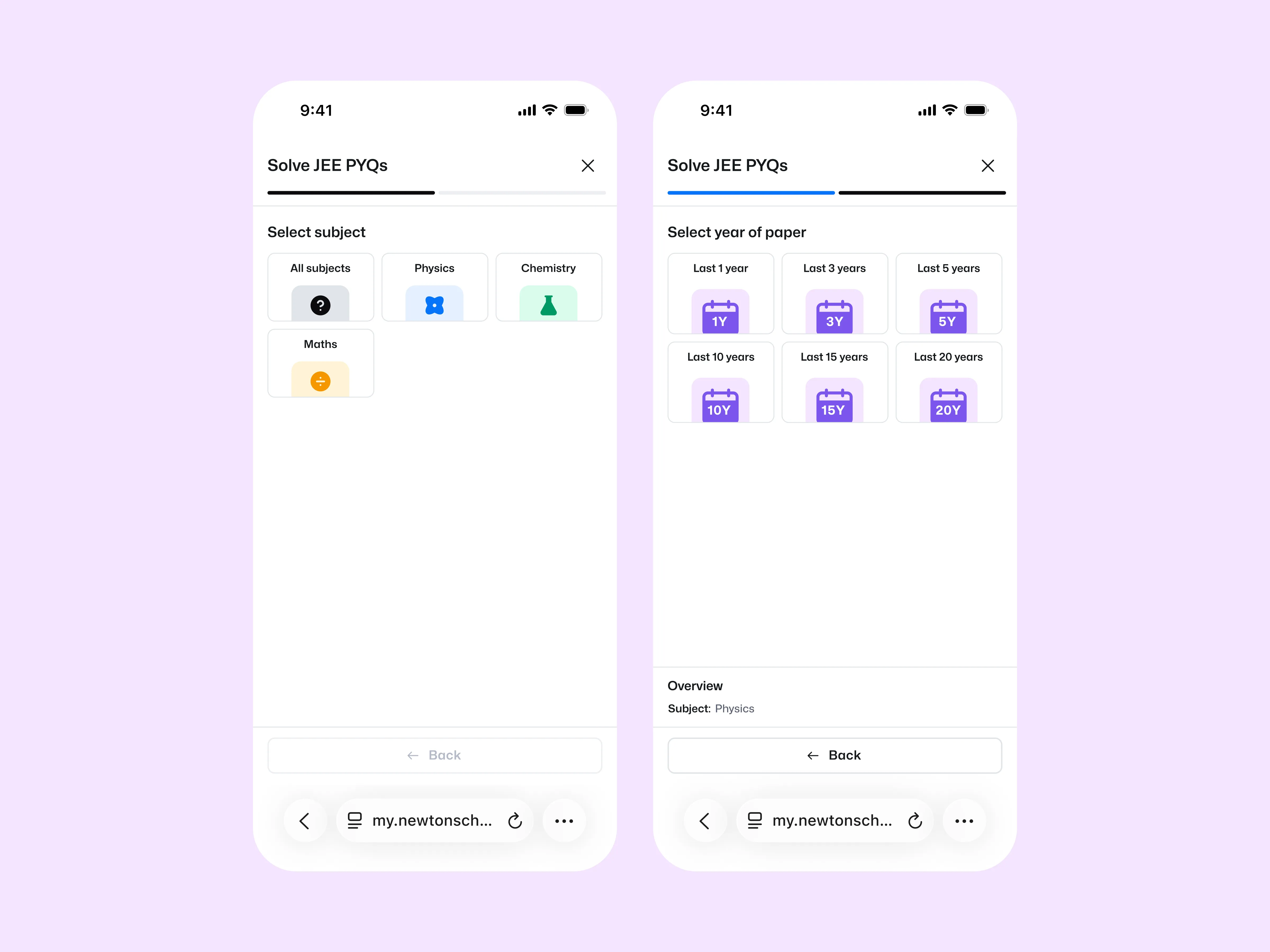
If they start from QOTD, we ask for both subject and year.
Either path leads into the core solving flow.
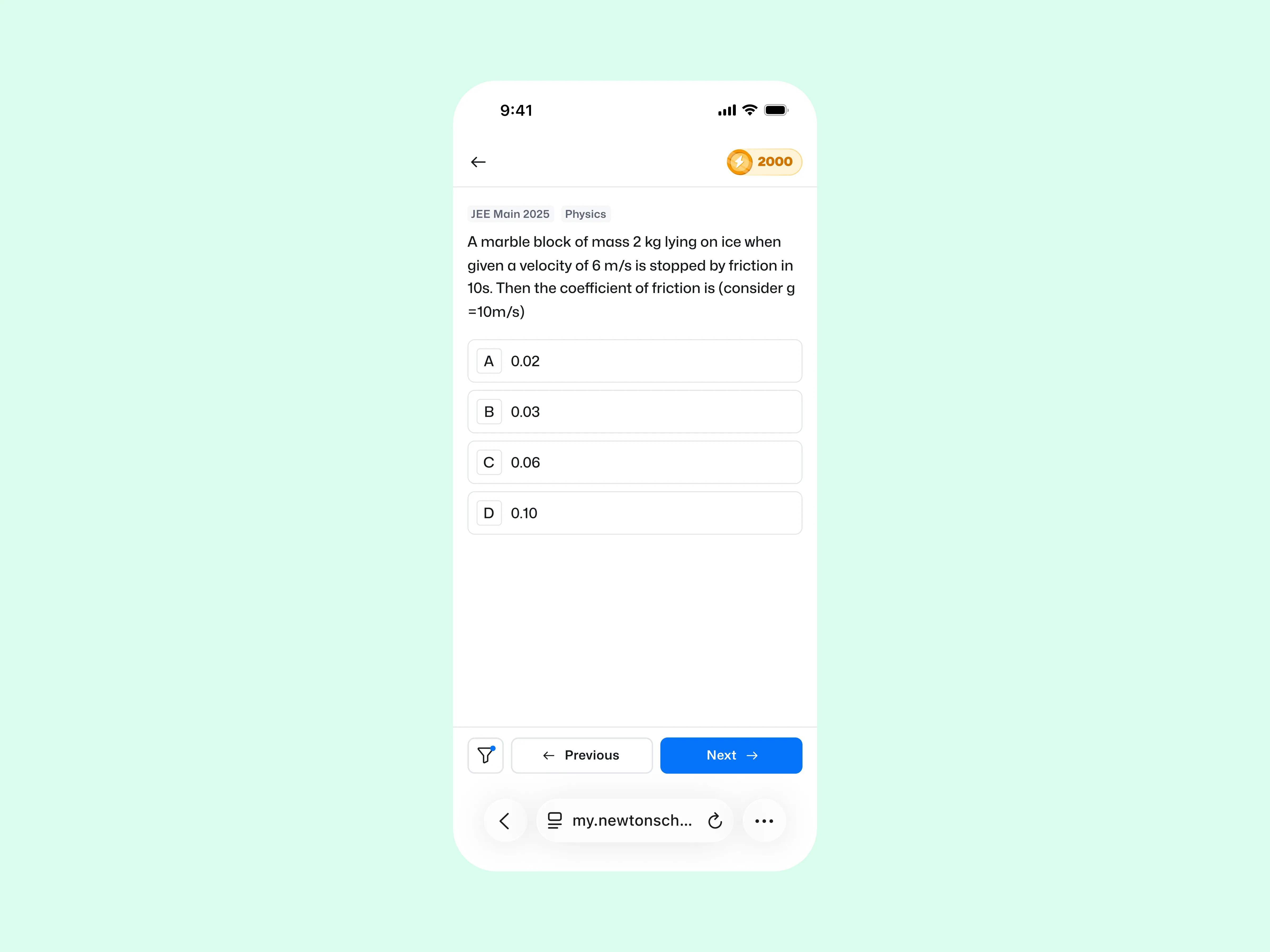
Students can change subject and year at any point.
Rewarding students
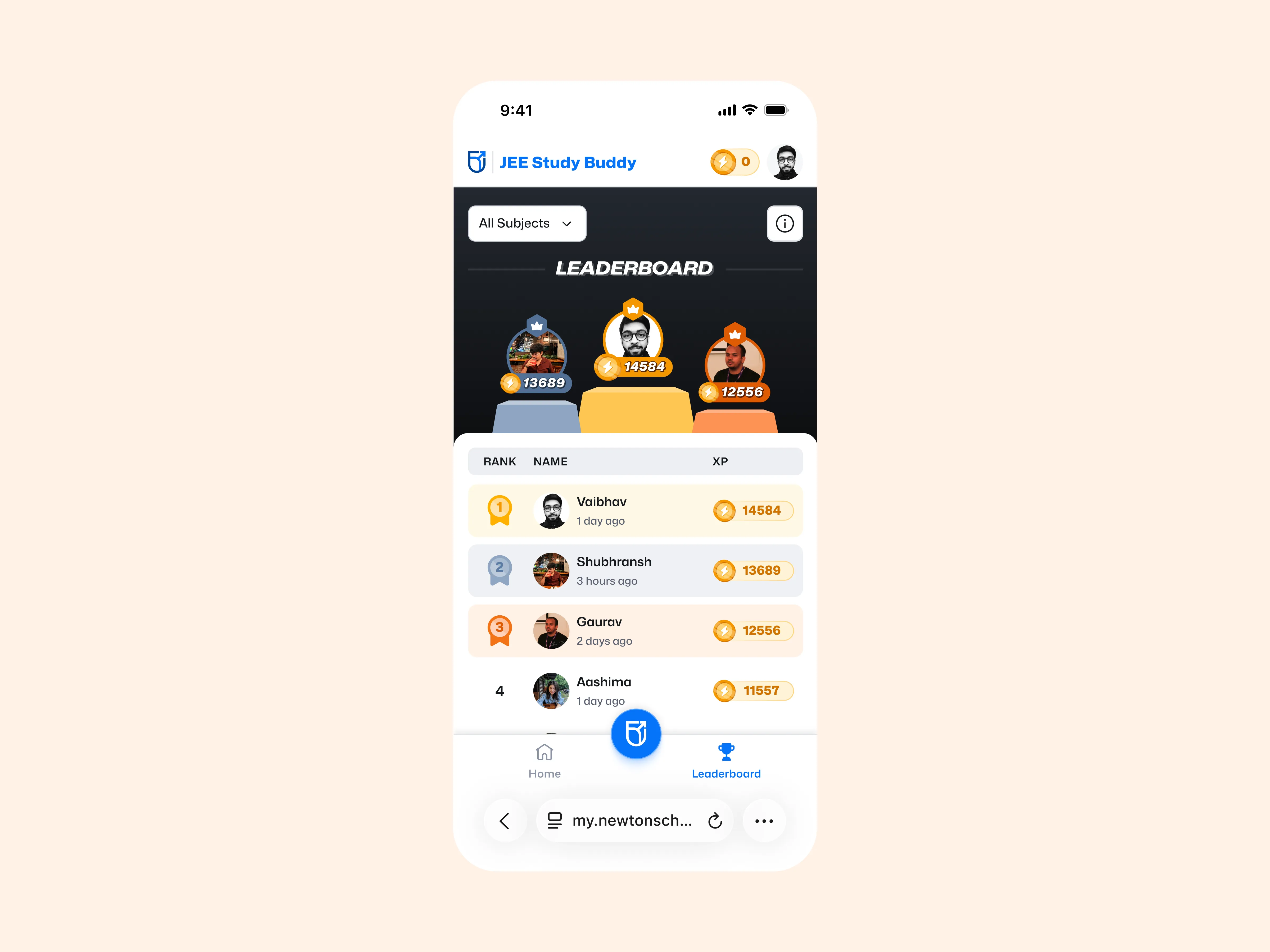
We used our existing XP points system to reward students. Every correctly solved question earns +4 XP, mirroring the real JEE scoring system.
Showing where they stand
XP feeds into our in-house leaderboard to show students their All India rank.
JEE is all about accuracy
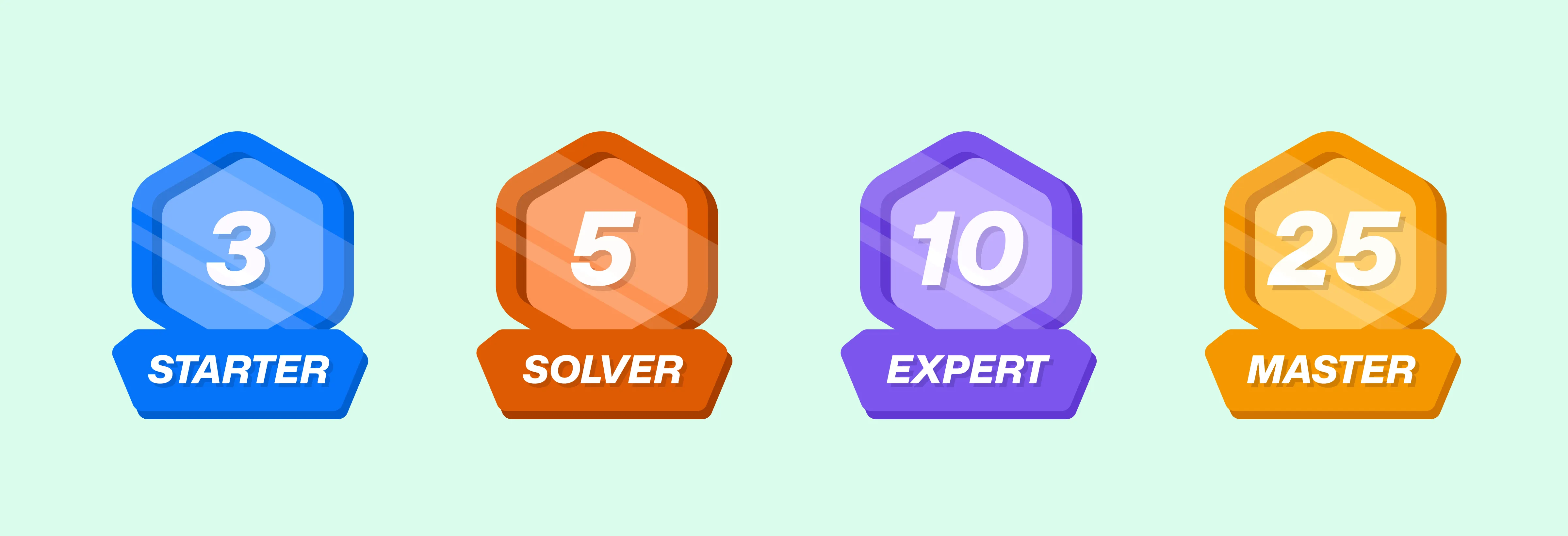
Students told us JEE is about accuracy, meaning how many correct answers you can give in a given time. This sparked the idea of badges for solving questions correctly in a row, increasing both accuracy and engagement.
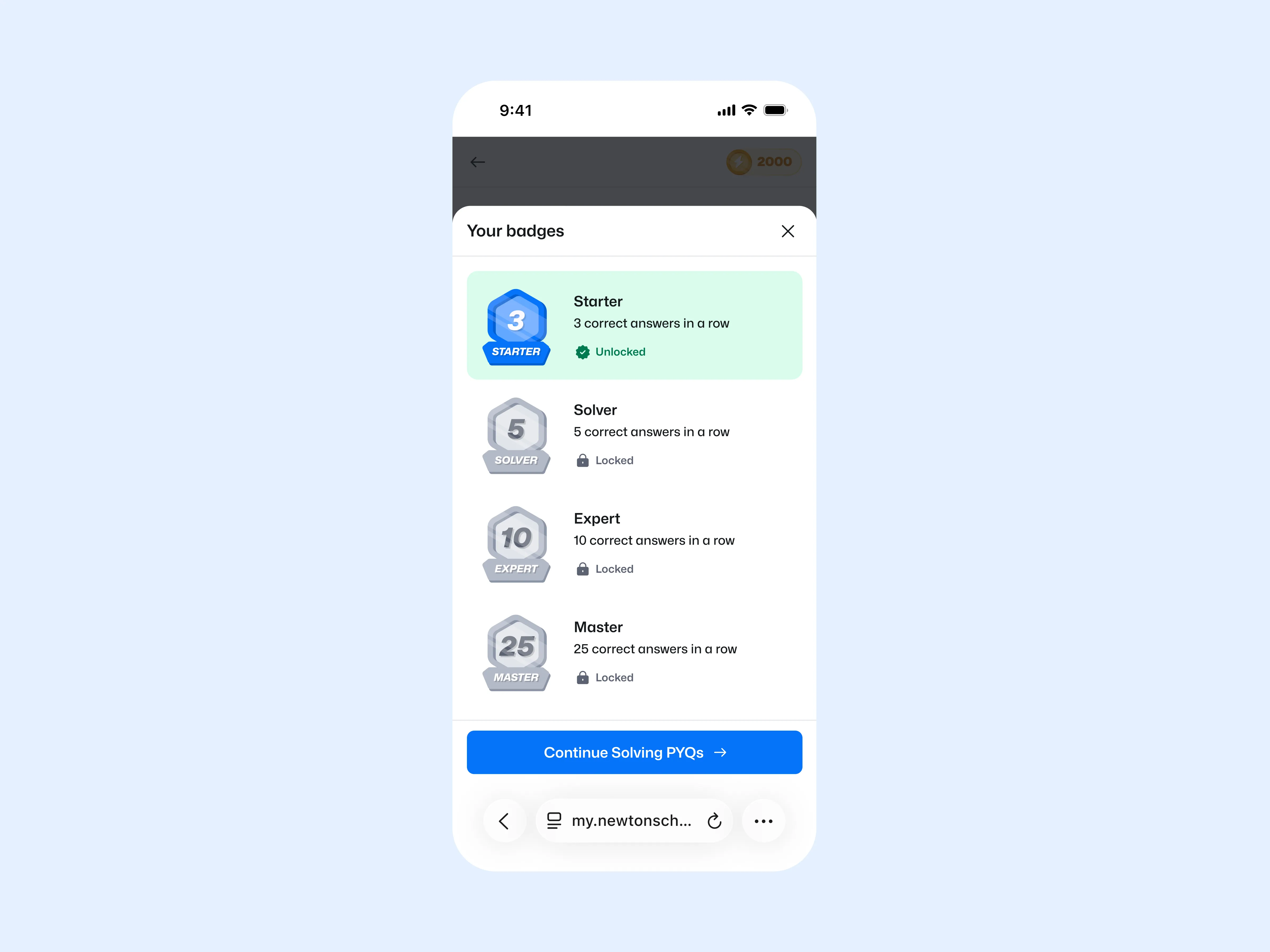
Badges are earned based on correct answers in a row.
We also show upcoming badges to keep students motivated to engage more.
But wait, what about brand awareness?
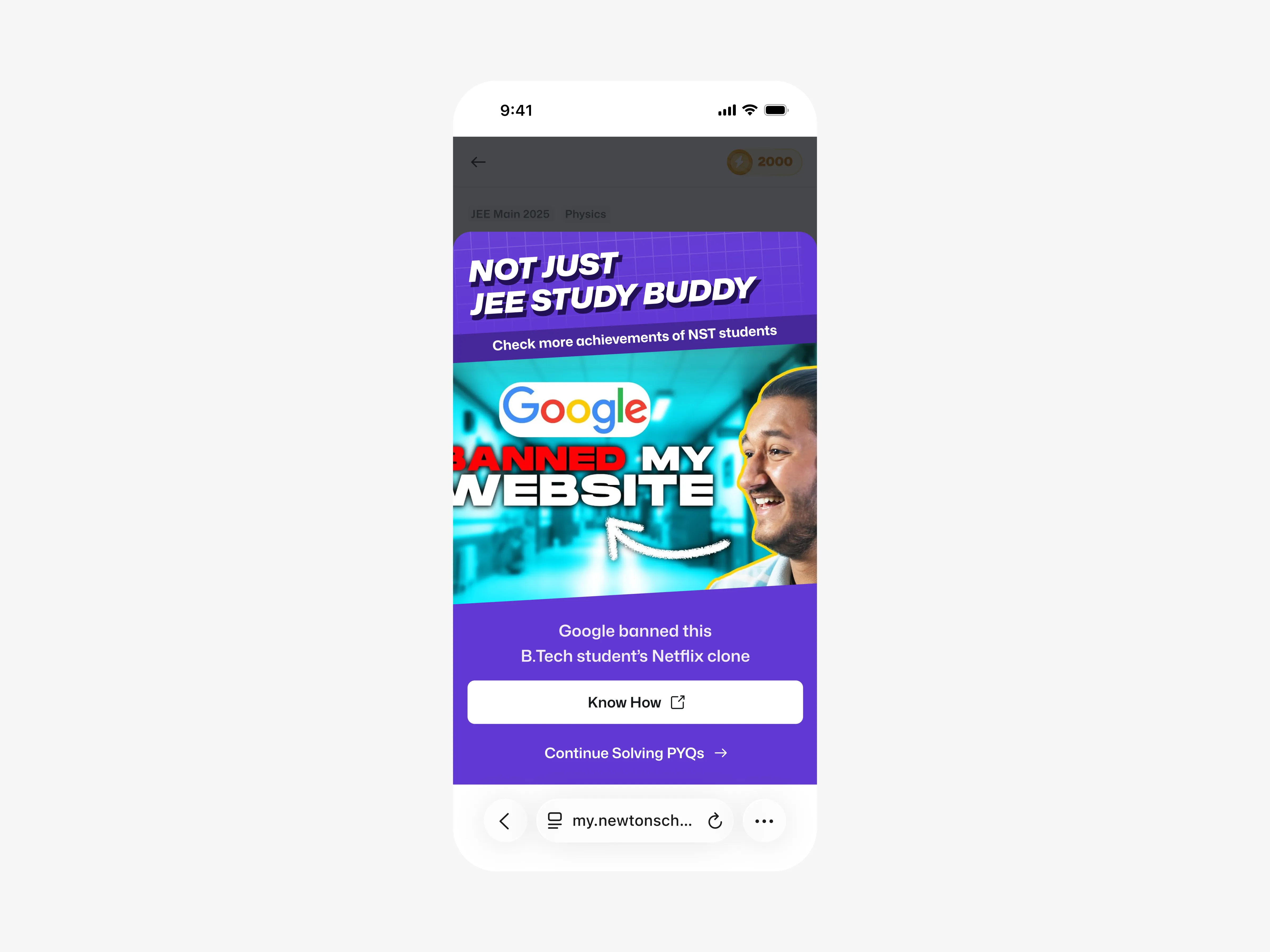
We leveraged the infinite question stream to show NST ads. Similar to games, ads appear between questions. We made them engaging by showcasing real achievements of NST students, since admission outcomes are what students care about most.
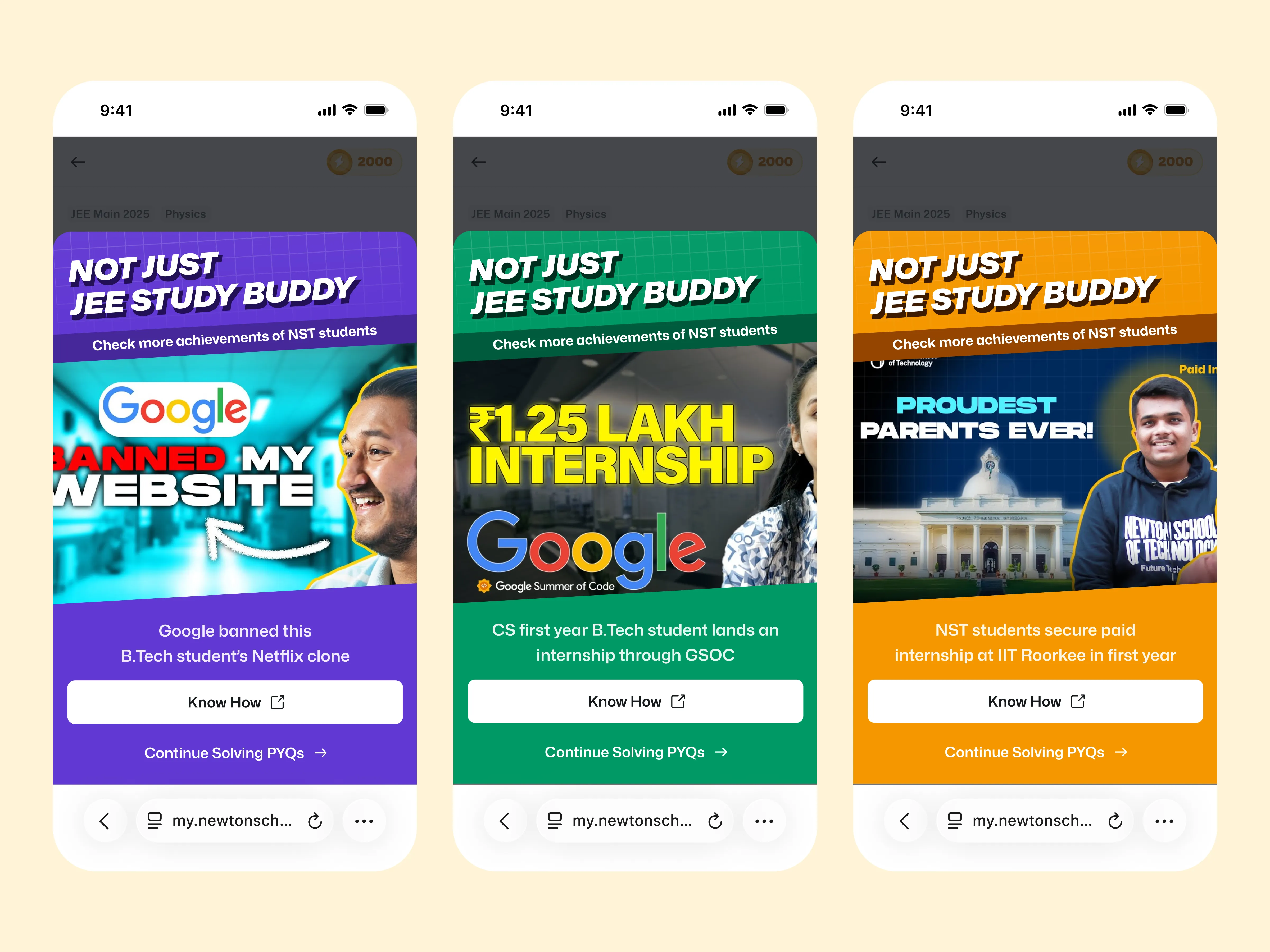
Approach 1 (skippable): An ad appears after the first 4 questions, then every 8 questions after that.
Approach 2 (unskippable): If a student answers incorrectly and wants to see the solution, a 30-second video ad plays first. The value exchange is strong enough that it doesn't feel frustrating.
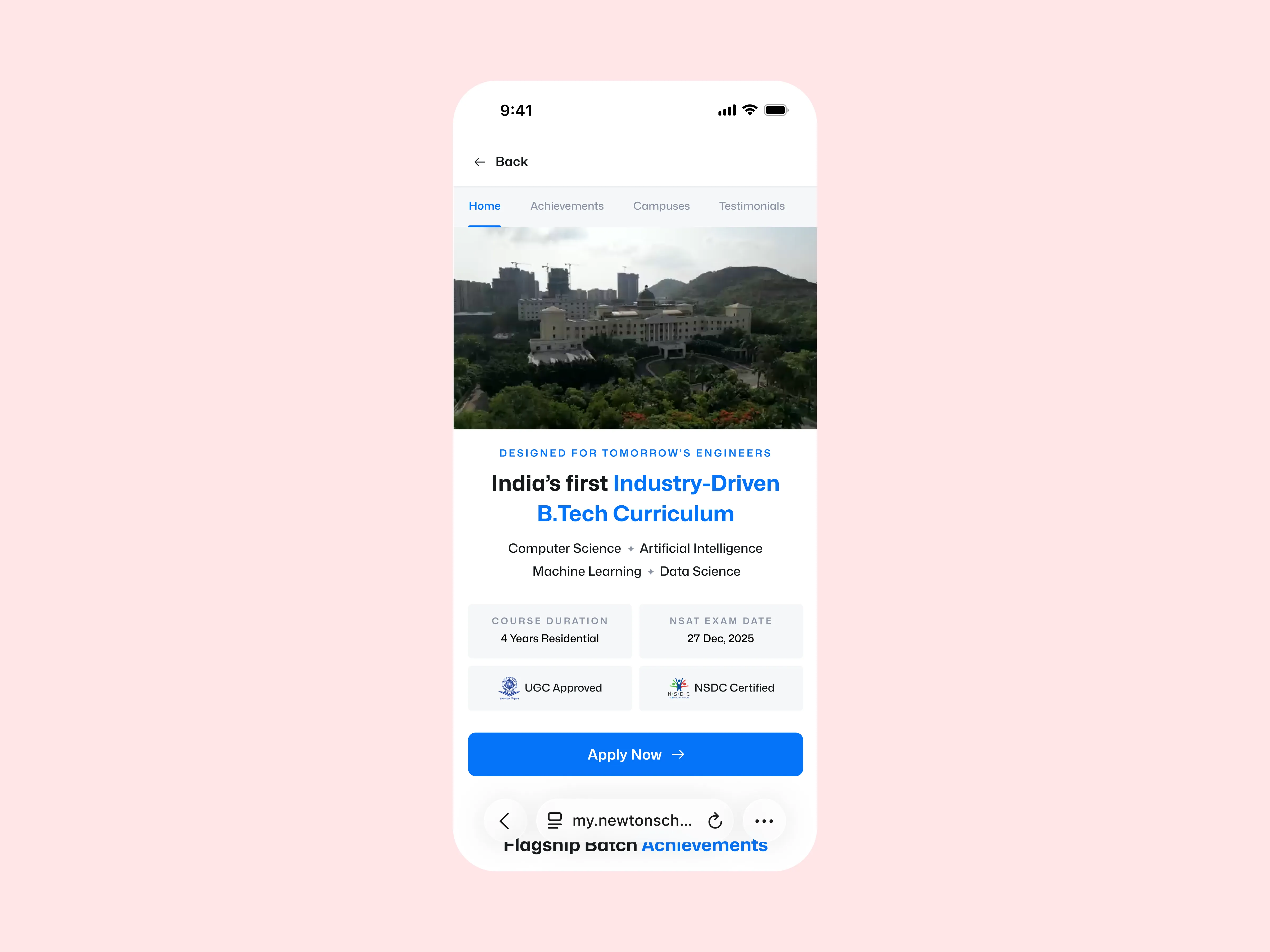
We also added a dedicated page showing that JEE Study Buddy is built by 1st year NST students to build brand credibility.
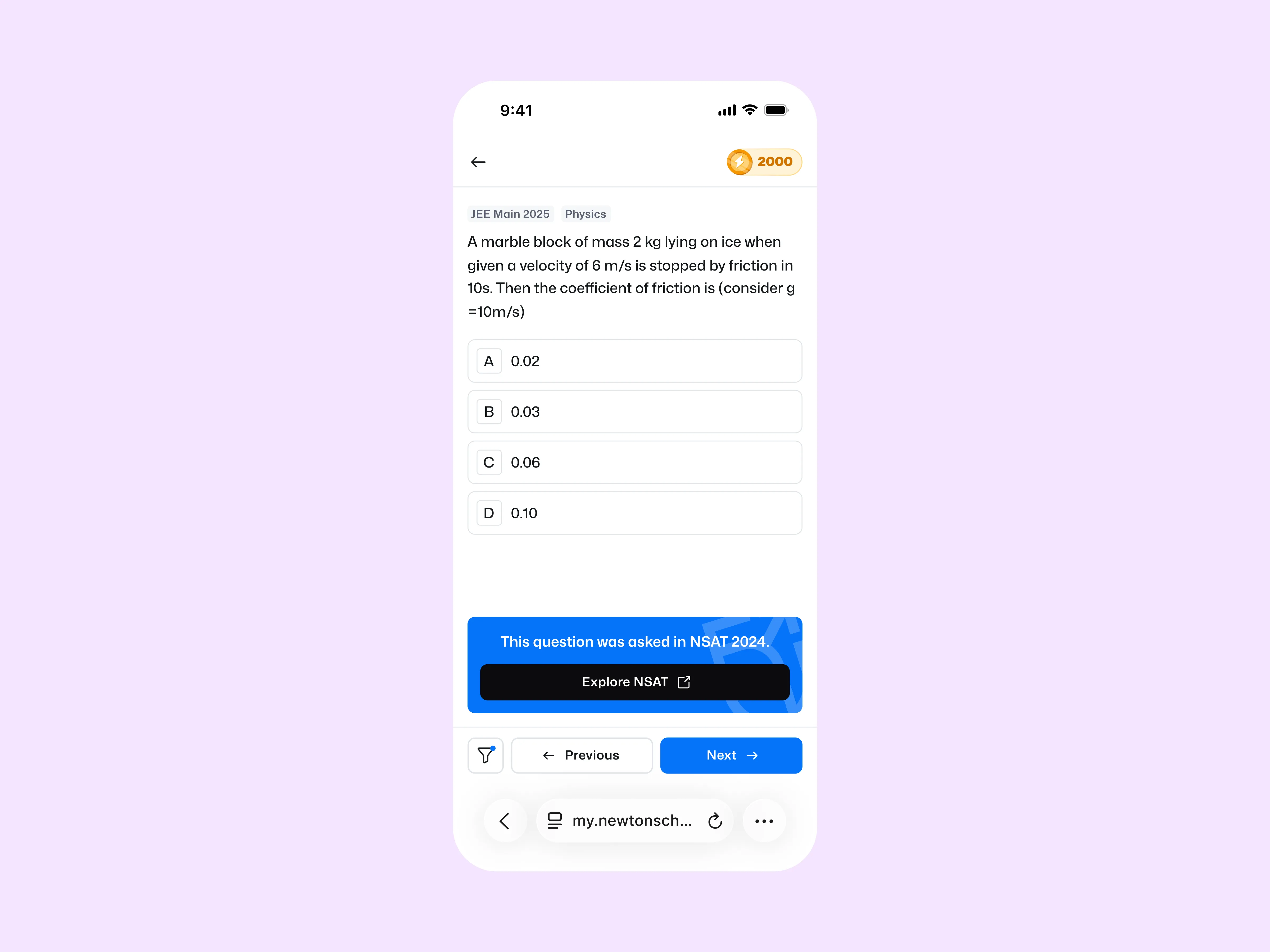
We also surfaced a nudge during the exam: "this was asked in NSAT" to build awareness of NST's entrance test.
What's next
After the admission cycle, we ran student calls to understand retention and drop-off. Key insights: students wanted other exams, chapter-wise prep, and bookmarking. We saw strong product potential and started building V2.
What did I learn
The biggest learning was the power of speed. In a fast-moving world, the one who executes and learns quickly wins. Speed is the new first-mover advantage.
Thanks to the team
A big thank you to Shubhransh Bhaskar and Gaurav Kumar for helping with designs, Mihir Sachdeva for extremely fast frontend development, Prashant Kumar for brainstorming, and Gaurav Kapatia (my manager) for the support and NST context.